Lost and Stolen Customer Support: Redefining Trust When It Matters Most
An Article by Lynsey Hoxha, Head of Sales at Dialect
When a customer reaches out to report a lost or stolen card, they are not simply initiating a service request. They are also entering an emotionally charged interactions they have with your business as trusting you to protect one of their most important assents: their money. For organisations, this should not be just an operational task to resolve, but a moment that can lead to long-term loyalty.
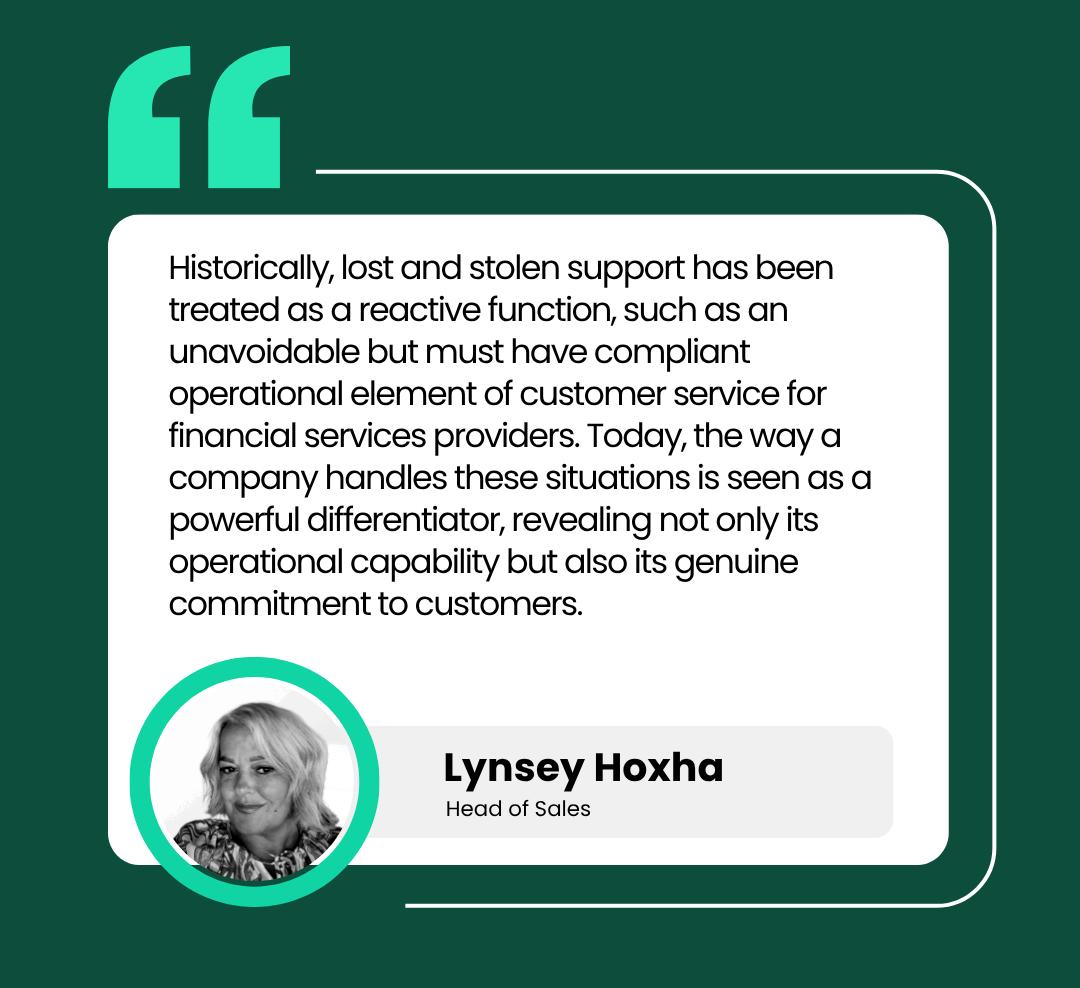
Historically, lost and stolen support has been treated as a reactive function, such as an unavoidable but must have compliant operational element of customer service for financial services providers. Today, the way a company handles these situations is treated as a powerful differentiator, revealing not only operational capability but also a brand’s genuine commitment to its customers.
The emotional context of these interactions cannot be overstated. When something so valuable is lost or security is compromised, customers are often experiencing stress, frustration, or even fear. In these moments, they are not just looking for resolution; they are searching for reassurance. They want to know their provider is competent, responsive, and firmly in control of the situation. A slow or fragmented response amplifies anxiety, while a confident and seamless experience can restore a sense of calm remarkably quickly.
This is why speed alone is no longer enough. Many organisations have optimised for rapid response times, but still fall short of delivering what customers truly need. The difference lies in how that speed is delivered. A purely transactional interaction, one that focuses on ticking process boxes without addressing the emotional dimension can feel cold and impersonal. But an experience that combines swift action with clarity, empathy, and transparency builds trust in real time.
By delivering a clear sense of control, protection, and care, payment firms can transform a potentially negative experience into a demonstration of reliability. Customers remember who supported them effectively when it mattered.
Technology is playing an increasingly central role in enabling this transformation, but its value depends heavily on how it is applied.
Customers can now block cards, freeze accounts, or report issues directly from their phone within seconds. These capabilities remove friction and reduce exposure to further risk, which is critical in time-sensitive scenarios.
However, automation must be balanced carefully with human support. While many actions can and should be automated for speed, not every interaction can be handled without human involvement and empathy. Situations involving complex fraud, emotional distress, or uncertainty still require skilled and highly trained agents who can adapt, reassure, and take ownership.
Another important shift is the movement from reactive support to proactive intervention. Advances in fraud detection and behavioural analytics allow organisations to identify suspicious activity and act before a customer even notices something is wrong. Real-time alerts, pre-emptive account protection, and guided next steps not only reduce risk but also signal that the organisation is actively safeguarding its customers.
Despite the advances in technology, the fundamentals remain deeply human. Clarity of communication, simplicity of process, and a sense of accountability are what ultimately define the experience. Customers need to understand what has happened, what actions are being taken, and what will happen next. Uncertainty is one of the greatest sources of anxiety in these situations, and clear, timely communication is one of the most effective ways to alleviate it.
Equally important is what happens after the initial report. Replacement journeys, account recovery, and follow-up communication all contribute to the overall perception of the experience. A fast initial response loses impact if the recovery process is slow or disjointed. Leading organisations therefore view lost and stolen support not as a single interaction, but as an end-to-end journey that must be carefully designed and continuously improved.
As organisations look to differentiate in increasingly competitive markets, moments like these become more valuable. Products and pricing can be replicated, but trust is much harder to earn and far easier to lose. Lost and stolen support sits at the intersection of risk and emotion, making it one of the clearest opportunities to demonstrate reliability and care in a tangible way.